


Time-Delayed Multisig and Legal Protections
Bitcoin self-custody is becoming more challenging due to rising security threats and regulatory demands. In 2024, crypto-related complaints in the U.S. surged to nearly 150,000, with $9.3 billion in losses. To address these risks, time-delayed multisignature (multisig) wallets offer a powerful solution by combining multi-approval security with built-in transaction delays. This setup not only secures assets but also supports compliance with U.S. regulations.
Key Takeaways:
- Multisig Basics: Requires multiple approvals (e.g., "2-of-3" or "3-of-5") for transactions, reducing single points of failure.
- Time-Delay Feature: Adds a waiting period before funds are transferred, allowing users to review and cancel suspicious activity.
- Legal Benefits: Creates audit trails documenting intent and compliance, aligning with federal guidelines like FinCEN and SEC standards.
- Physical Security: Protects against coercion by preventing instant transfers, giving users time to respond.
Why It Matters:
Time-delayed multisig wallets like BitVault significantly improve Bitcoin security and legal protection. They provide a buffer against hacking, theft, and coercion while meeting regulatory expectations for transparency and accountability. With features like AES 256-bit encryption, integration with Bitcoin Layer 2 solutions, and customizable delays, these tools are essential for safeguarding digital assets in today’s landscape.
BITCOIN MULTISIG – 4 reasons to upgrade your security!
Security Benefits of Time-Delayed Multisig
Time-delayed multisig takes Bitcoin security to the next level by adding extra layers of protection against both digital and physical threats. This approach not only strengthens defenses but also provides a critical buffer to detect and respond to unauthorized activities.
Stopping Unauthorized Access and Theft
One of the standout advantages of time-delayed multisig is its ability to intercept unauthorized transactions before they’re finalized. Hackers, once they gain access to private keys, typically act fast to drain funds before anyone notices. In fact, over 60% of cryptocurrency losses between 2021 and 2024 were due to hacking incidents [3]. By introducing a mandatory waiting period, time-delayed multisig disrupts this strategy, giving legitimate owners a chance to step in and stop the transaction.
This delay allows security teams to review flagged transactions and cancel any that seem suspicious. Automated systems can monitor for red flags like transfers to unknown addresses, unusually large amounts, or transactions initiated outside normal business hours. These safeguards act as a crucial line of defense against unauthorized activities. Beyond digital security, time-delayed multisig also bolsters physical security.
Protection Against Physical Threats and Coercion
Time-delayed multisig doesn’t just protect against hackers – it also addresses the growing risks of physical attacks on Bitcoin holders. As Bitcoin’s value has risen, so has the threat of coercion. Traditional wallets fall short here; if an attacker gains physical access, they can force an immediate transfer. Time-delayed multisig changes the game by preventing instant transactions, making it less appealing for attackers who rely on quick access.
The delay increases the attacker’s exposure time, raising the chances of detection. Even if an attacker manages to coerce multiple keys, the delay gives victims time to alert authorities, activate emergency protocols, or implement backup security measures. This added time is a critical advantage in high-pressure situations.
Standard Multisig vs. Time-Delayed Multisig Comparison
The table below highlights how time-delayed multisig improves on standard multisig setups:
| Feature | Standard Multisig | Time-Delayed Multisig |
|---|---|---|
| Authorization Method | Requires multiple signatures (M-of-N scheme) | Requires multiple signatures plus a waiting period |
| Speed of Execution | Immediate after collecting signatures | Delayed execution after signatures |
| Protection Against Key Compromise | Relies on securing multiple keys | Adds an intervention window even if keys are compromised |
| Physical Attack Resistance | Instant transfer possible if enough keys are present | Prevents immediate transfers, reducing coercion risks |
| Detection Window | None after signatures are collected | Includes a review period before execution |
| Complexity | Moderate setup and management | Higher complexity due to time controls |
| Emergency Response | No intervention once signed | Allows cancellation during the delay period |
| Regulatory Compliance | Basic audit trail via signatures | Enhanced documentation with delay records |
While standard multisig offers solid protection by requiring multiple signatures, it falls short once an attacker gathers the necessary keys – transactions proceed immediately. Time-delayed multisig, on the other hand, provides a crucial window for intervention, making it particularly valuable for high-value accounts. It also supports compliance efforts by maintaining a detailed audit trail that documents both the transaction’s authorization and the deliberate waiting period, offering greater transparency and security.
Legal and Regulatory Considerations in the United States
Building on the security features we’ve already covered, let’s dive into how time-delayed multisig wallets align with U.S. legal and regulatory frameworks. These wallets meet key federal oversight standards, including those set by FinCEN and the SEC, thanks to their time delay mechanisms and built-in audit trails. Below, we’ll explore how these features create a strong foundation for legal compliance and protection.
Evidence of Intent and Audit Trails
One of the standout legal benefits of time-delayed multisig wallets is how they provide clear evidence of intent. When a transaction is initiated, the time delay creates a record of deliberate action – an essential factor in regulatory reviews and legal disputes.
Every transaction generates a detailed audit trail that includes timestamps for when the transaction was initiated, when each signature was added, and when the delay period started. This meticulous record allows regulators and courts to confirm that all required authorization steps were followed. Plus, during the delay period, users can attach documentation, such as the transaction’s purpose or supporting evidence, further strengthening their legal position.
Compliance with U.S. Digital Asset Regulations
Time-delayed multisig wallets are a natural fit for adhering to FinCEN’s digital asset guidelines. Since FinCEN’s 2013 interpretive guidance on virtual currencies, the agency has emphasized the importance of transparency and accountability in combating money laundering and terrorism financing [5]. According to FinCEN:
"FinCEN regulates all crypto assets for purposes of AML and combating the financing of terrorism." [5]
The audit trails provided by these wallets serve as checkpoints for compliance, supporting adherence to the Travel Rule and other AML requirements. For Money Services Businesses (MSBs), the delay periods allow for real-time checks against sanctions lists, enhanced due diligence, and thorough documentation for high-risk transactions.
These wallets also align with SEC standards for investor protection. For crypto assets deemed securities under the Howey Test, time-delayed multisig systems demonstrate responsible custody practices and strong internal controls, which are crucial for regulatory compliance.
Best Practices for Legal Protection
To fully leverage the legal advantages of time-delayed multisig, it’s essential to combine technical safeguards with sound administrative practices. Start by establishing clear policies that define who can initiate transactions, the approval process, and the required delay periods. Each transaction should include a documented business rationale and any related evidence.
For added security:
- Store signing keys in separate, well-documented locations.
- Regularly audit authorization levels to ensure compliance [6].
- Keep wallet software updated with the latest security patches [6].
- Use hardware wallets for offline key storage to reduce risk.
Adopting these practices has become increasingly common. By 2024, over 20% of Bitcoin wallets utilized multisig, reflecting a 30% jump in usage from the previous year [7]. Additionally, more than 70% of Fortune 500 companies using cryptocurrency now rely on multisig wallets, showcasing their growing acceptance [7].
Finally, don’t overlook emergency preparedness. Set up protocols for canceling suspicious transactions during delay periods, handling urgent legitimate requests, and recovering from disasters. Regular compliance reviews should analyze transaction patterns, delay period effectiveness, documentation quality, and overall system performance to ensure you’re meeting regulatory expectations. These steps not only enhance security but also provide a solid legal safety net.
BitVault‘s Time-Delayed Multisig Implementation
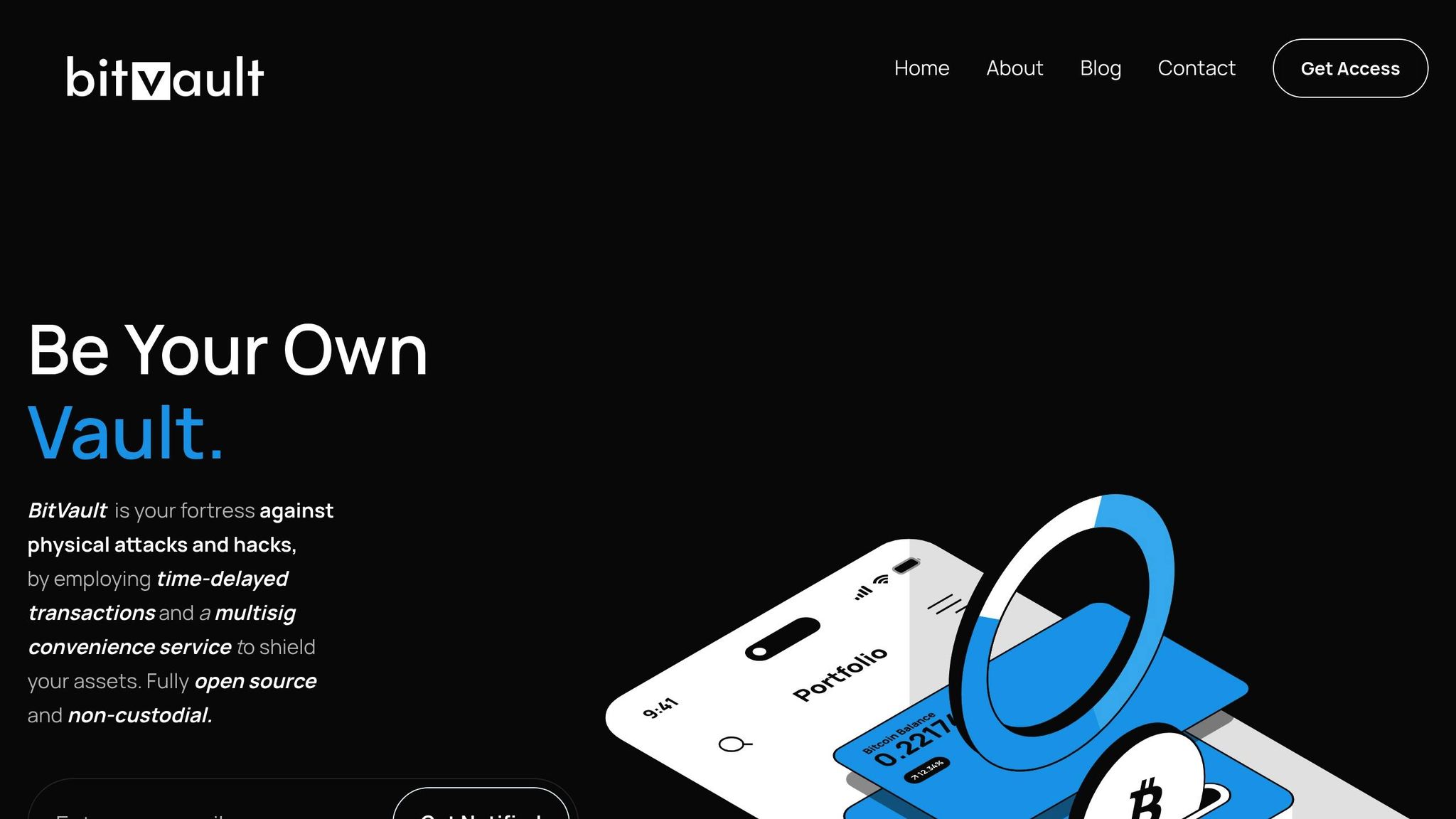
BitVault is an open-source Bitcoin wallet designed to protect assets from both digital and physical threats while aligning with U.S. regulatory standards. Let’s explore what makes BitVault stand out.
Key Features of BitVault
At its core, BitVault offers time-delayed transactions, which provide a critical window to detect and prevent unauthorized activities. This feature is further enhanced by a multisignature convenience service. To keep users informed of any suspicious activity, BitVault also employs secret notifications that alert users to attempted transactions.
Security is a top priority, with AES 256-bit encryption safeguarding all data and communications. Users can also customize transaction delays, tailoring security settings to their specific needs.
In addition to these security measures, BitVault integrates advanced technologies to improve functionality and user experience.
Integration with Bitcoin Layer 2 Solutions
Bitcoin’s scalability has long been a challenge, but BitVault addresses this by integrating with Layer 2 solutions like the Liquid and Lightning Networks. These integrations significantly enhance transaction speed and efficiency.
- Lightning Network: This feature allows users to open payment channels for instant, low-cost transactions. BitVault extends its time-delayed multisig protection to these channels, ensuring added security.
- Liquid Network: By leveraging sidechain architecture, Liquid Network provides faster settlement times and improved privacy while maintaining Bitcoin’s security through its two-way peg mechanism [8].
To further streamline transactions, BitVault includes an L1 fee optimization tool that suggests the best timing and fee structures, a particularly useful feature during periods of high network activity.
Legal and Security Benefits of BitVault
BitVault’s open-source, non-custodial design ensures users retain full control of their private keys while adhering to U.S. legal standards. Its CISA+ certification underscores its compliance with federal cybersecurity requirements, reinforcing trust in its robust security framework.
sbb-itb-c977069
Setting Up Time-Delayed Multisig: Step-by-Step Guide
This guide translates the potential benefits of time-delayed multisig into practical steps you can follow. By addressing both the legal and security advantages, here’s how to set up your time-delayed multisig wallet.
Configuring Your Multisig Wallet
Setting up a time-delayed multisig wallet requires careful planning, especially when it comes to security and aligning with U.S. regulations. The first step is deciding on the M-of-N signature setup. For instance, a 2-of-3 setup might work well for a small business, while a 3-of-5 configuration could better suit larger organizations [4].
Choose a wallet provider with a strong security reputation. A provider like BitVault offers features such as customizable delays and audit trails, which can improve both security and compliance.
Next, customize the transaction delay to strike a balance between security and operational needs. For example, longer delays may provide added security but could slow down frequent transactions. BitVault allows you to tailor these delays to fit your typical transaction patterns.
Make sure every signatory uses strong, unique passwords along with two-factor authentication [4]. Before moving significant funds, test the setup with small transactions to ensure everything is configured correctly.
Maintaining Legal Compliance
Document every aspect of your multisig setup, including the M-of-N configuration, the roles of each signatory, and the time delay settings. This documentation can serve as proof of your security measures and operational procedures.
Create protocols for transaction approvals, emergency access, and key management that comply with U.S. regulations. Regular audits are essential – conducting quarterly reviews can help ensure that all signers are trustworthy and that the setup remains secure [4].
Be mindful of KYC (Know Your Customer) and AML (Anti-Money Laundering) requirements in your jurisdiction [1]. Keep detailed records of transactions, including timestamps, amounts, and the parties involved. BitVault’s audit trail capabilities make it easier to maintain these records. Additionally, any changes to signatory lists, time delays, or approval thresholds should be documented and approved through a formal process.
Backup and Recovery Security
Once compliance is in place, focus on securing your funds with reliable backup procedures. Store each private key offline and in separate, secure locations. This prevents a single breach from compromising your wallet [4]. Use multiple offline backups in different locations to protect against disasters or regional risks. Recovery phrases should also be stored securely in geographically diverse locations [2].
"Always remember that it is your responsibility to adopt good practices in order to protect your money" – Bitcoin.org [9]
To add redundancy, use an M-of-N setup where M is less than N, allowing access to funds even if some keys are lost [4]. Never store recovery phrases on internet-connected devices; keep them offline. Durable backup tools are ideal for long-term storage, as they are more reliable than paper-based methods [10].
Regularly practice recovery procedures to confirm that seed phrases are accurate and usable [2]. Annual recovery tests can help identify potential issues before they escalate. For additional security, consider using a backup escrow or a "dead man’s switch." This ensures that funds remain accessible even if authorized parties are incapacitated or compromised [11].
For inheritance planning, work with a trusted legal advisor to create a secure plan. Document the locations of backups and recovery procedures in your estate planning, but avoid including sensitive information like recovery phrases. Lastly, make sure your wallet backups are updated regularly to include any new Bitcoin addresses or changes to Bitcoin Layer 2 solutions, such as Lightning Network channels and Liquid Network transactions [9]. BitVault’s integration with these solutions ensures your backup strategy covers all bases.
Conclusion: Time-Delayed Multisig for Bitcoin Security
Time-delayed multisig brings together multi-signature transaction approvals and built-in delays, offering a robust way to safeguard Bitcoin assets while aligning with U.S. regulatory requirements. This approach not only strengthens security but also provides the documentation framework that regulators are increasingly emphasizing.
The benefits of time-delayed multisig are clear. In 2024 alone, private key compromises resulted in $2.2 billion in losses [12]. By eliminating single points of failure, this method adds multiple layers of defense against unauthorized access and theft, significantly reducing risk.
On the regulatory side, time-delayed multisig creates verifiable audit trails, documenting transaction intent and approvals. This aligns seamlessly with U.S. regulatory expectations, which is especially critical in a rapidly evolving digital asset market now valued at two trillion dollars [13].
Solutions like BitVault demonstrate how time-delayed multisig can integrate with Bitcoin Layer 2 networks, such as Lightning and Liquid. This ensures enhanced security while maintaining the speed and functionality that users demand.
FAQs
How does time-delayed multisig improve security against both cyber and physical threats?
Time-delayed multisig wallets bring an added level of security by requiring a set waiting period before transactions are completed. This delay acts as a safeguard, giving wallet owners the opportunity to spot and cancel any unauthorized or suspicious activity. It’s a smart way to protect against both online threats and physical breaches.
What sets these wallets apart from standard multisig wallets is their unique combination of features. While traditional multisig wallets need multiple approvals and process transactions right away, time-delayed multisig adds a crucial buffer. This delay window not only strengthens multi-approval security but also allows users to step in if something seems off. As a result, it becomes much tougher for attackers to misuse stolen keys or gain access through physical means, offering users a stronger sense of security.
What legal advantages do time-delayed multisig wallets offer in the United States?
Time-delayed multisig wallets offer important legal and regulatory advantages for users in the United States. These wallets create a secure, tamper-proof audit trail, which helps users comply with financial regulations and anti-money laundering (AML) laws. This kind of transparency simplifies meeting reporting obligations and demonstrating accountability when needed.
The built-in time-delay feature provides an added layer of security by allowing transactions to be reviewed and approved over a set timeframe. This delay minimizes the chances of unauthorized transfers, aligning with institutional security protocols and meeting regulatory expectations for oversight and fraud prevention. On top of that, the multisig structure itself strengthens defenses against theft or unauthorized access, offering greater confidence to both individuals and organizations.
How can I set up and maintain a time-delayed multisig wallet to protect my Bitcoin and comply with U.S. regulations?
Setting Up and Managing a Time-Delayed Multisig Wallet
To effectively set up and manage a time-delayed multisig wallet while staying compliant with U.S. regulations, start by focusing on the security of your private keys. Make sure to store each key in a separate, secure location. This reduces the chances of theft or loss and ensures your funds remain protected. Using a wallet that supports time-delayed transactions alongside multisignature functionality adds another safeguard against unauthorized access.
For regulatory compliance, maintain thorough transaction records. Include details like dates, times, amounts (both in USD and BTC), and the purpose behind each transaction. These records are crucial for meeting IRS reporting requirements and staying aligned with other cryptocurrency regulations. It’s also a good idea to stay informed about any changes to crypto laws and consult legal professionals regularly to ensure your assets remain secure and compliant.