

Best Bitcoin Security Tools for 2025
Bitcoin security in 2025 demands stronger tools to combat advanced threats like AI phishing and wallet hacks. If you’re managing Bitcoin, choosing the right security tool is critical. Here’s a quick breakdown of the top tools to keep your assets safe:
- BitVault: Offers time-delayed transactions, secret notifications, and multisig support. Best for advanced users and institutions. Subscription-based.
- Trezor Safe 5: Reliable hardware wallet with user-friendly recovery features. Great for beginners. Mid-range pricing.
- Coldcard Q: Bitcoin-only wallet with air-gap technology and advanced security. Ideal for experienced users. Priced at $149.97.
- Ledger Flex: Combines premium security with a touchscreen interface. Supports multiple currencies. Costs $249.
- Blockstream Jade Plus: Affordable, open-source wallet with QR-based air-gapped transactions. Good for budget-conscious users.
Quick Comparison:
| Tool | Price (USD) | Key Feature | Best For |
|---|---|---|---|
| BitVault | Subscription | Time-delayed transactions | Advanced/Institutions |
| Trezor Safe 5 | Mid-range | Beginner-friendly recovery | Beginners |
| Coldcard Q | $149.97 | Air-gap technology | Experienced Users |
| Ledger Flex | $249 | Touchscreen + multisig support | Multi-currency Users |
| Blockstream Jade Plus | Affordable | QR-based air-gapped security | Budget Users |
Each tool has its strengths and trade-offs. Choose based on your expertise, budget, and security needs.
Best Bitcoin Hardware Wallet? Side-by-Side Comparison (2025 Edition)
1. BitVault
BitVault is an open-source, non-custodial wallet created by Dr. Francesco Madonna. It’s designed to protect users against physical coercion, digital threats, and mistakes, while addressing modern challenges like AI-driven phishing and quick attack methods.
What sets BitVault apart is its focus on making Bitcoin nearly impossible to confiscate through physical force. It uses private alerts and discreet notification systems, creating a cancellation window that gives users precious time to respond and deter attackers.
Security Architecture
BitVault’s security relies on a multi-layered approach, combining time-delayed transactions, multisignature (multisig) operations, and secret notification alerts. The time-delay feature enforces a waiting period – ranging from hours to days – before any Bitcoin transfer is completed. This delay acts as both a safeguard and a deterrent against unauthorized access.
The platform integrates with hardware wallets, adding an extra layer of physical security. Because it’s 100% open-source, its code is open to public scrutiny, ensuring transparency and trust without relying on proprietary systems.
Another key feature is its private, encrypted notifications. These are sent to trusted devices whenever a transaction is initiated, allowing users to discreetly notify authorities or contacts if needed. This system works seamlessly with its advanced multisig capabilities.
Multisig and Threshold Support
BitVault’s multisignature functionality removes single points of failure by requiring multiple keys to authorize transactions. It supports various M-of-N configurations, with 2-of-3 setups being a popular choice for balancing ease of use and security. For institutions, this setup enforces governance by requiring multiple parties to reach consensus before funds can be moved, ensuring clear separation of duties.
Threat Detection and Intervention
The time-delayed transaction system also acts as a built-in safety net. By delaying fund transfers, BitVault gives users critical time to spot and cancel unauthorized transactions if any suspicious activity is detected.
Recovery and Backup Options
BitVault provides unlimited SD card backups for key recovery, which are secured using decaying multisigs with time-locks. This ensures users can recover their keys independently of the provider. Additionally, the 2-of-3 multisig structure ensures that even if one private key is lost, users can still access their Bitcoin. These features make recovery both secure and convenient.
Cost (USD)
BitVault uses a monthly subscription model, offering enterprise-level security without requiring a large upfront investment in hardware. The subscription includes all software features, updates, and security improvements. Compatible hardware wallets are sold separately, keeping the service flexible and scalable for a range of users.
2. Trezor Safe 5
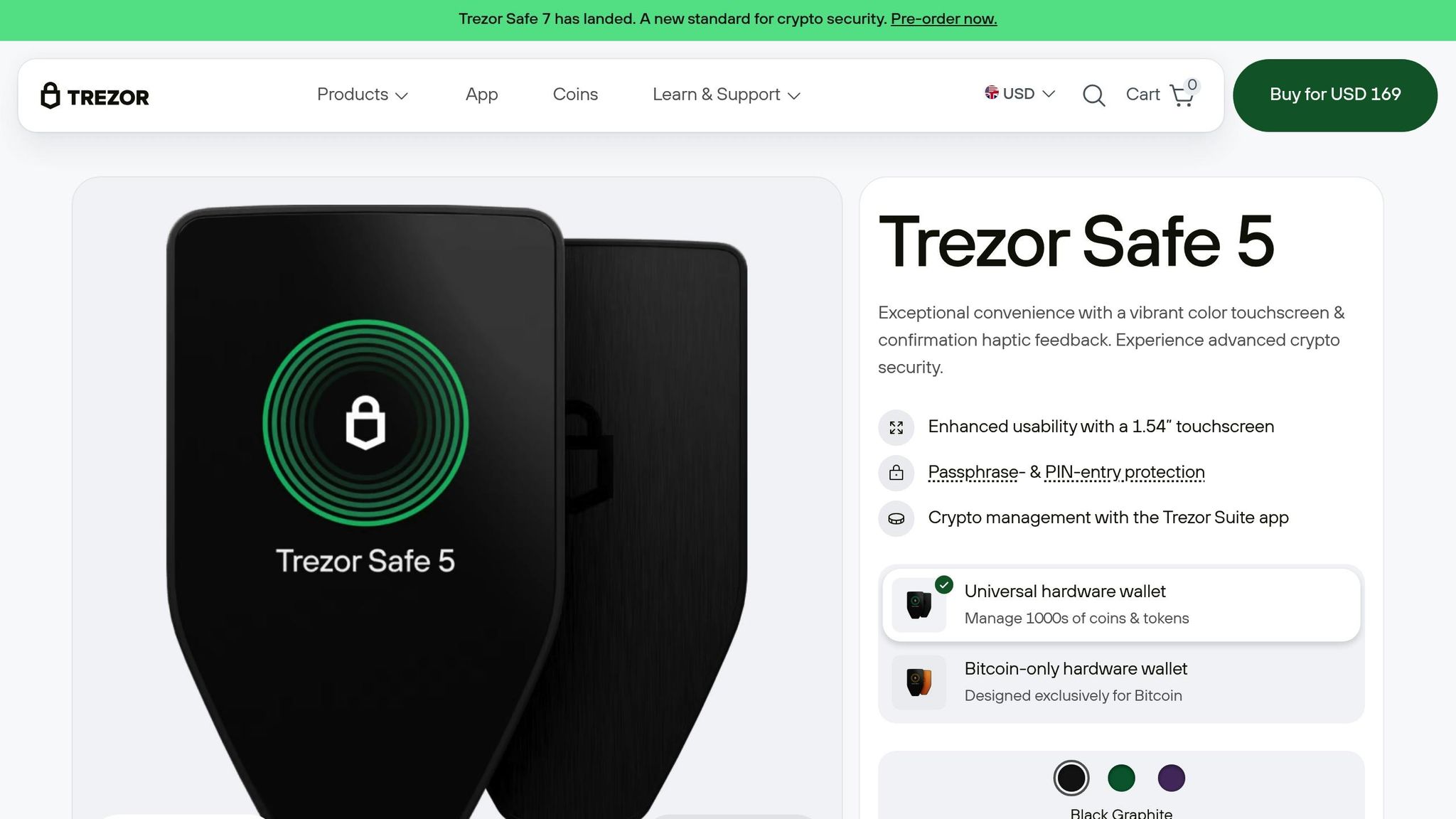
The Trezor Safe 5, developed by SatoshiLabs, is designed to safeguard Bitcoin holdings by handling key operations directly within the device. By combining cutting-edge blockchain security with hardware isolation and user authentication, it provides a strong layer of protection for your digital assets.
Security Architecture
The Trezor Safe 5 employs hardware isolation to keep critical operations secure. Its built-in display allows you to review and confirm transaction details directly on the device, reducing the risk of interference from compromised computers or other external systems.
Multisignature Support
This wallet supports multisignature setups, offering the ability to create custom configurations for individual or shared control. By incorporating multisig, it minimizes the chances of a single point of failure in managing your Bitcoin.
Recovery and Backup Options
If the device is lost, Trezor Safe 5 ensures you can regain access through its seed phrase recovery feature. Additional backup options are also available, giving you greater peace of mind when it comes to asset recovery.
Pricing
Trezor Safe 5 is positioned in the mid-range price category and includes essential accessories. For those seeking extra security, enhanced backup options can be purchased separately.
3. Coldcard Q
The Coldcard Q is a Bitcoin-only hardware wallet designed with security as its top priority. By focusing solely on Bitcoin transactions, it avoids the vulnerabilities that can arise from supporting multiple cryptocurrencies. This specialized approach sets it apart from other wallets that cater to a broader range of digital assets.
Security Architecture
The Coldcard Q leverages air-gap technology to ensure your Bitcoin is safe. This means the device never connects to the internet or your computer via USB during typical use. Instead, it relies on QR codes and microSD cards to transfer transaction data, creating a secure, isolated environment.
Its internal design uses a dual-chip system, combining a secure element chip with a general-purpose microcontroller. This layered approach ensures that even if one component is compromised, your private keys remain safe. The wallet also includes tamper detection features that can identify physical intrusion attempts. If tampering is detected, the device can automatically erase sensitive data to protect your funds.
Multisig and Threshold Support
The Coldcard Q is built to handle multisig wallets with ease. It can generate xpubs (extended public keys) for multisig setups without exposing your private keys to connected devices. Whether you’re setting up a simple 2-of-3 configuration or a more complex arrangement involving multiple parties, the wallet provides flexibility.
For businesses and institutions, the wallet offers threshold signature scheme support. This feature allows organizations to implement advanced security measures, requiring multiple approvals for large transactions – all while maintaining the air-gapped security model.
Threat Detection and Automation
The Coldcard Q comes with built-in security monitoring to keep an eye out for suspicious activity. If an unusual transaction request is detected, the device alerts users on its display before any signing takes place.
It also performs automatic security checks, verifying transaction details like addresses and amounts before proceeding. If something doesn’t add up, the wallet halts the operation and displays a warning, helping to prevent fraud or user mistakes. These features work hand-in-hand with its robust recovery options.
Recovery and Backup Options
For recovery, the Coldcard Q uses a 24-word BIP39 seed phrase. It also supports encrypted microSD backups, allowing users to securely store multiple wallet configurations and settings. These backups are further protected with passphrases, adding extra layers of security.
Another standout feature is its duress wallet functionality, which lets users create decoy wallets containing small amounts of Bitcoin. These can be accessed under pressure, while the main funds remain hidden and secure.
Cost (USD)
The Coldcard Q is priced at $149.97, making it a premium option among hardware wallets. While it costs more than basic models, the price reflects its Bitcoin-specific design and advanced security features. The package includes a microSD card and basic accessories, with additional backup tools and accessories available for purchase to enhance your setup.
4. Ledger Flex
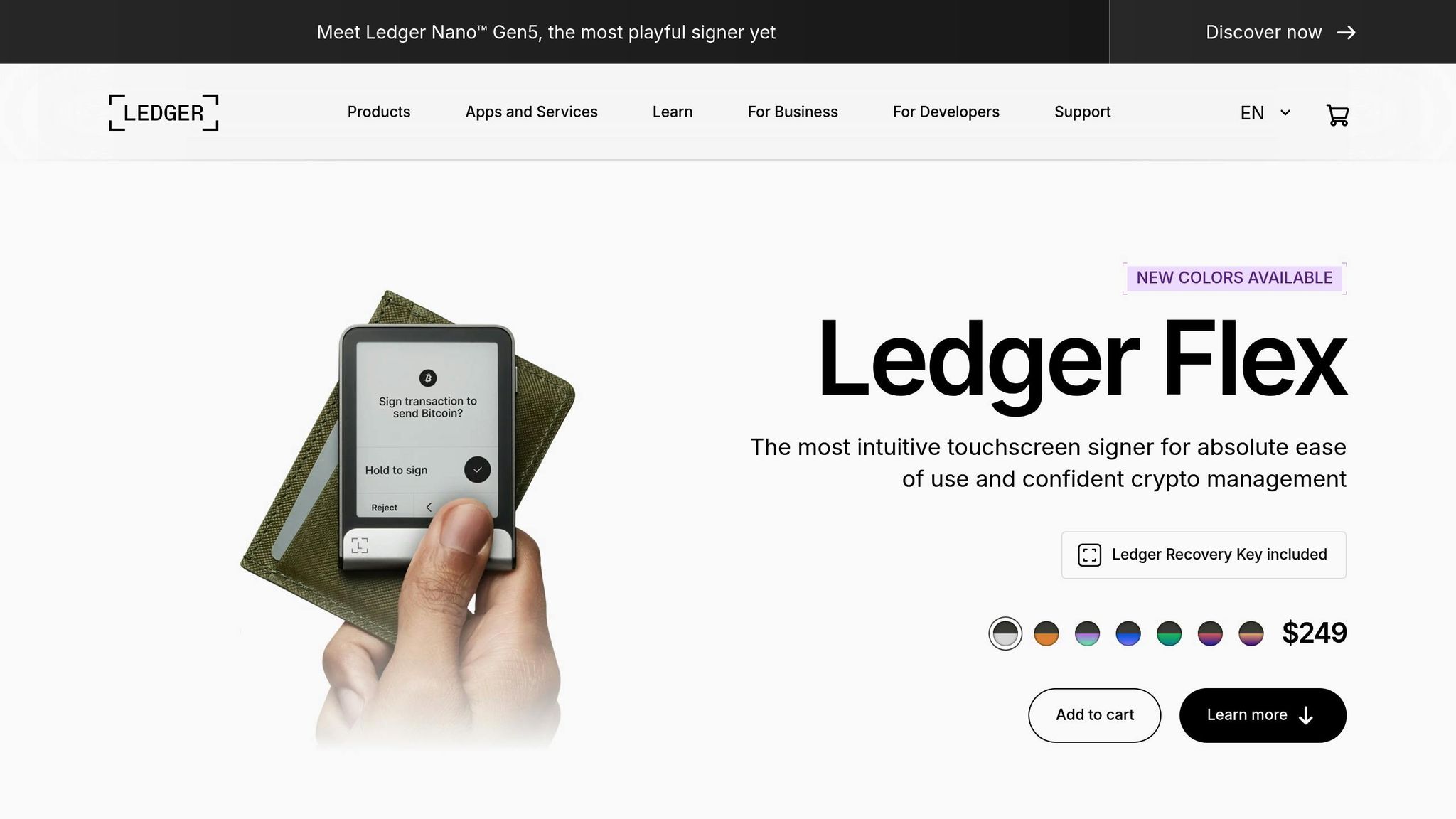
Ledger Flex brings a fresh approach to Bitcoin security by combining enterprise-level protections with an easy-to-use interface. It tackles the challenges of multisig setups and transaction verification that Bitcoin users face today.
Security Architecture
At the core of Ledger Flex is a Secure Element chip certified at CC EAL 6+, one of the highest security benchmarks in consumer hardware. This chip ensures that your private keys are stored in a secure, isolated environment. As Ledger explains:
"Your private keys are isolated in a certified Secure Element, powered by the secure Ledger OS™ and the secure, easy to read touchscreen, protecting your assets from dangerous cyber threats."
The device operates on the proprietary Ledger OS™, which handles cryptographic processes internally, ensuring that sensitive data never leaves the secure chip. Adding to its usability, the device features a 2.84-inch E Ink® touchscreen, allowing users to verify transactions directly on the hardware. Ian Rogers, Ledger’s Chief Experience Officer, emphasizes the importance of this feature:
"Without a secure screen, you are not secure. Period."
This combination of hardware and software provides a strong foundation for advanced multisig and threshold features.
Multisig and Threshold Support
Ledger Flex simplifies complex multisig setups by securely generating xpubs, making it ideal for institutional workflows that require multiple approvals. It also integrates with threshold signature schemes, offering institutions a way to manage approvals securely while keeping keys stored on the hardware device. The touchscreen interface plays a key role here, clearly showing participants, required signatures, and transaction details for easy verification.
Threat Detection and Verification
To prevent blind signing, Ledger Flex uses Clear Signing technology. Introduced in April 2025, this feature ensures that all transaction details can be verified directly on the device, providing an extra layer of security.
Recovery and Backup Options
Ledger Flex follows the widely used BIP39 standard for recovery, generating a 24-word recovery phrase during setup. It also offers the Ledger Recovery Key as an additional backup option, giving users peace of mind. For those seeking extra security, the device supports passphrase-protected hidden wallets, which remain invisible unless the correct passphrase is entered.
Cost (USD)
At $249, Ledger Flex is positioned as a mid-range premium hardware wallet. It has been well-received, earning an average rating of 4.6/5 from various tech review sites. With both Bluetooth and USB-C connectivity, users can choose between the convenience of wireless use and the reliability of a wired connection – all without sacrificing security.
sbb-itb-7e890ce
5. Blockstream Jade Plus
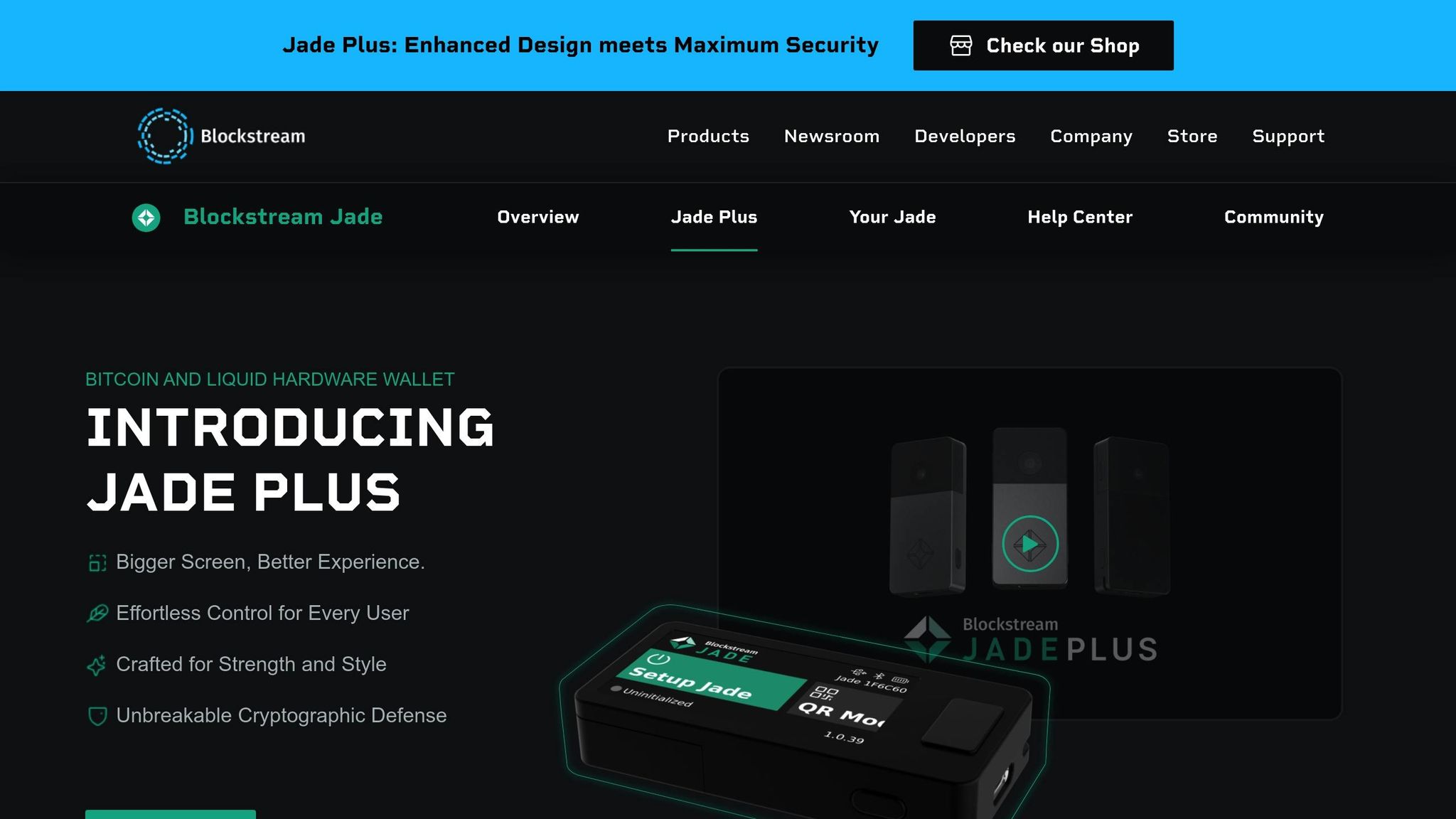
Let’s dive into another cutting-edge Bitcoin security tool: Blockstream Jade Plus. This hardware wallet is built with Bitcoin users in mind, focusing on simplifying multisig wallet management while offering secure recovery options.
Multisig Configuration Backup
One standout feature of Blockstream Jade Plus is its ability to register multisig configurations directly on the device. This means users can confirm receive and change addresses right on the hardware. Additionally, these configurations can be exported via QR codes to a companion app, making it easier to reconstruct a wallet if important files are lost.
Recovery and Backup Options
When it comes to recovery, Blockstream Jade Plus uses a standard recovery phrase that users must store securely offline. To enhance security, Blockstream suggests keeping the recovery phrase in an offline metal backup or using a Blockstream Capsule. The wallet also includes a "Temporary Signer" feature, which allows users to verify their recovery phrase against an 8-character fingerprint during a temporary session. This session ends as soon as the device powers down.
For added protection, the recovery phrase stored on the device is encrypted and secured with a PIN. During setup, users have the option to either generate a new wallet with a fresh recovery phrase or restore an existing wallet by entering a recovery phrase from another device.
These features make Blockstream Jade Plus an essential tool for anyone serious about Bitcoin security, combining ease of use with advanced backup and recovery options.
6. Bitkey
As of 2025, information about Bitkey remains scarce. Publicly available documentation offers little detail about its security structure or the range of features it provides.
Security Architecture
While specifics about Bitkey’s security framework are not disclosed, its development team is reportedly connected to Bitcoin specialists like Jesse Posner. However, beyond this association, there’s no further information on how Bitkey ensures security.
Multisig and Threshold Support
There’s no indication that Bitkey supports multisignature or threshold signatures. Notably, it does not appear in prominent lists of top multisig wallet solutions for 2025. This absence is significant, as multisig features have become a key element of Bitcoin security.
Cost (USD)
Bitkey’s pricing remains unknown, as no public sources provide details about its cost. This lack of transparency stands out when compared to the clearly defined pricing models offered by other tools.
7. Swan Guard
When it comes to the 2025 Bitcoin security landscape, Swan Guard remains somewhat of a mystery. Unlike tools such as BitVault or Trezor Safe 5, which provide detailed documentation about their security features, Swan Guard offers very little publicly available information. This lack of transparency makes it difficult to evaluate its capabilities or compare it to other options.
Security Architecture
One of the biggest challenges with Swan Guard is the absence of publicly available documentation. There are no technical specifications, white papers, or detailed protocols to examine. Without these, it’s impossible to determine whether Swan Guard aligns with the rigorous security standards expected in Bitcoin security. This lack of clarity leaves its architecture and reliability open to question.
Multisig and Threshold Support
Swan Guard’s support for multisignature configurations or threshold signature schemes remains unconfirmed. Without this information, it’s hard to gauge whether it can integrate with the advanced security practices that are becoming standard in the Bitcoin ecosystem.
Cost (USD)
Details about Swan Guard’s pricing are also unavailable, leaving potential users in the dark about its affordability or value for money.
Advantages and Disadvantages
Here’s a closer look at the strengths and weaknesses of each tool, presented in a way that makes it easy to compare their features and limitations side by side.
| Tool | Advantages | Disadvantages |
|---|---|---|
| BitVault | • Time-delayed transactions add protection against hacking and coercion • Multi-signature architecture reduces single points of failure • Secret notifications allow discreet alerts in emergencies • Open-source code enables public security reviews • Hardware wallet integration with devices like Jade Plus |
• Monthly subscription fees can add up over time • Time delays might frustrate users needing quick access |
| Trezor Safe 5 | • Proven hardware security with years of reliability • Supports a wide range of cryptocurrencies beyond Bitcoin • Beginner-friendly interface for easy use • Strong community support and resources |
• Physical vulnerability if the device is lost or damaged • Single-signature setup limits flexibility • USB dependency for transactions • Non-upgradable hardware requires full replacement for updates |
| Coldcard Q | • Air-gapped operation eliminates network-based risks • Bitcoin-only design minimizes attack vectors • Advanced security features for experienced users • Durable design built to withstand physical wear |
• Steep learning curve may deter beginners • Limited support for altcoins restricts diversification • Higher price tag compared to simpler wallets • Complex recovery process if the device fails |
| Ledger Flex | • Flexible display enhances transaction verification • Multi-currency support for diverse portfolios • Trusted brand reputation in hardware wallet security • Frequent firmware updates to address new threats |
• Closed-source firmware reduces transparency • Past security breaches may affect trust • Centralized recovery services create reliance on the company • Premium pricing for advanced features |
| Blockstream Jade Plus | • Open-source hardware and software for community audits • Affordable pricing makes it accessible • Camera-based air-gapped transactions using QR codes • Compact design for portability |
• Lower brand recognition compared to bigger names • Smaller development team may slow updates • Basic interface lacks advanced customization options • Newer to the market means fewer user reviews |
| Bitkey | • Simplified design appeals to mainstream users • Mobile-first approach suits modern usage • Social recovery options reduce risks of lost keys • Integrated services streamline Bitcoin management |
• Scarce technical details make evaluation difficult • Centralized features could compromise decentralization • Unproven security model in practical scenarios • Limited availability restricts access |
| Swan Guard | • Potential enterprise features for institutional use | • No public documentation prevents proper evaluation • Unknown security framework raises concerns • Unclear pricing makes budgeting difficult • Limited transparency hinders comparison |
Each tool addresses Bitcoin security challenges in its own way, offering a mix of strengths and trade-offs. For instance, BitVault’s time-delayed transactions offer solid protection against coercion but might frustrate users needing instant access. On the other hand, air-gapped devices like Coldcard Q provide top-tier security by staying offline, though they might complicate everyday use.
For users prioritizing simplicity, options like Bitkey streamline the experience, though they may lack features advanced users expect. Meanwhile, feature-packed tools like Coldcard Q cater to experienced users but may overwhelm beginners. Transparency is another key factor, with open-source solutions like BitVault and Blockstream Jade Plus offering more visibility, while closed-source systems like Ledger Flex rely on proprietary measures.
Ultimately, factors like cost, usability, security, and transparency will guide users in choosing the right tool for their needs – balancing immediate protection with long-term asset management.
Final Recommendations
When deciding on a Bitcoin security tool, it’s essential to consider your specific needs, level of expertise, and how you plan to use it. Whether you’re a beginner, managing institutional funds, or planning for inheritance, there’s a solution tailored to your situation.
For Individual Bitcoin Holders
If you’re just starting out, Trezor Safe 5 or Blockstream Jade Plus are excellent choices for their ease of use and reliable security. For seasoned users who prioritize top-tier protection, the Coldcard Q is a solid pick, though it comes with a steeper learning curve. If physical threats are a concern, BitVault offers features like time-delayed transactions and secret notifications, though it requires a subscription to maintain these protections.
For Institutional Users
Institutions need tools that combine advanced multisig functionality with strong governance features. BitVault stands out with its enforced multisig capabilities and built-in review periods, while the Coldcard Q provides an air-gapped design for meeting strict security protocols.
For Inheritance Planning
When planning for inheritance, it’s crucial to strike a balance between security and accessibility for beneficiaries. BitVault offers a 2-of-3 multisig setup, ensuring redundancy without centralized control. Alternatively, Trezor Safe 5 provides clear and user-friendly recovery options, making it a practical choice.
Budget Considerations for U.S. Users
For those on a budget, Blockstream Jade Plus delivers robust security at an affordable price. While BitVault has a subscription model that caters to high-value holdings, premium devices like Coldcard Q and Ledger Flex require a higher initial investment but come with advanced features.
Geographic Considerations
U.S.-based users should prioritize solutions that ship domestically and offer local customer support. Options like Trezor Safe 5 and Ledger Flex have well-established distribution networks in the U.S., whereas newer entrants like Bitkey may face availability limitations.
Ultimately, the best security tool is one that aligns with your risk tolerance and expertise. A simple wallet that you actively use is far more effective than a complex one that sits idle.
FAQs
How do BitVault’s time-delayed transactions enhance Bitcoin security?
BitVault introduces time-delayed transactions to enhance security by incorporating a customizable waiting period before a transaction is finalized. This delay gives users a crucial window to intervene if they notice suspicious activity, such as a hacking attempt or unauthorized access.
This feature is especially beneficial for protecting substantial Bitcoin holdings or for institutions managing high-value assets. When paired with tools like multisig wallets or advanced threat detection systems, it adds an extra safeguard, minimizing the chances of unauthorized transactions and keeping funds well-protected.
What makes the Coldcard Q’s air-gap technology a standout feature for Bitcoin security?
The Coldcard Q uses air-gap technology to boost Bitcoin security by keeping the device entirely offline. This means it never connects to the internet or any networked system, drastically reducing the chances of remote hacking or malware attacks. It’s a solid option for anyone serious about protecting their Bitcoin.
With this technology, transactions are signed offline and then safely transferred using methods like QR codes or microSD cards. By avoiding direct online exposure, this setup provides an extra shield of security, especially for users who value strong protection for their Bitcoin assets.
What should I consider when deciding between a multisig wallet and a single-signature wallet for securing Bitcoin?
When choosing between a multisig wallet and a single-signature wallet, it all comes down to your security needs and how much risk you’re comfortable with.
A multisig wallet requires multiple private keys to approve a transaction. This adds an extra layer of security, making it harder for unauthorized users to access your funds. It’s particularly useful for scenarios like shared custody, improved decision-making in group settings, or protecting against threats like extortion. Plus, if one key is compromised, your funds are still safe as the other keys are needed to complete a transaction.
On the other hand, a single-signature wallet relies on just one private key. While this makes it simpler and quicker to use, it also means that if the key is lost or stolen, your funds are at serious risk. There’s no backup plan – one mistake could result in losing everything. This is why many people lean toward multisig wallets when security is their top priority, even if it means sacrificing some simplicity.
Related Blog Posts
- Bitcoin Wallet Backup: Complete Security Checklist
- Ultimate Guide to Bitcoin Transaction Security
- Never leave Bitcoin on Exchanges, Learnings from Bitcoin7.com Hack in 2011
- Hardware vs Software Wallets: Security Analysis
https://app.seobotai.com/banner/banner.js?id=68faca749cea6427b3fd6180