

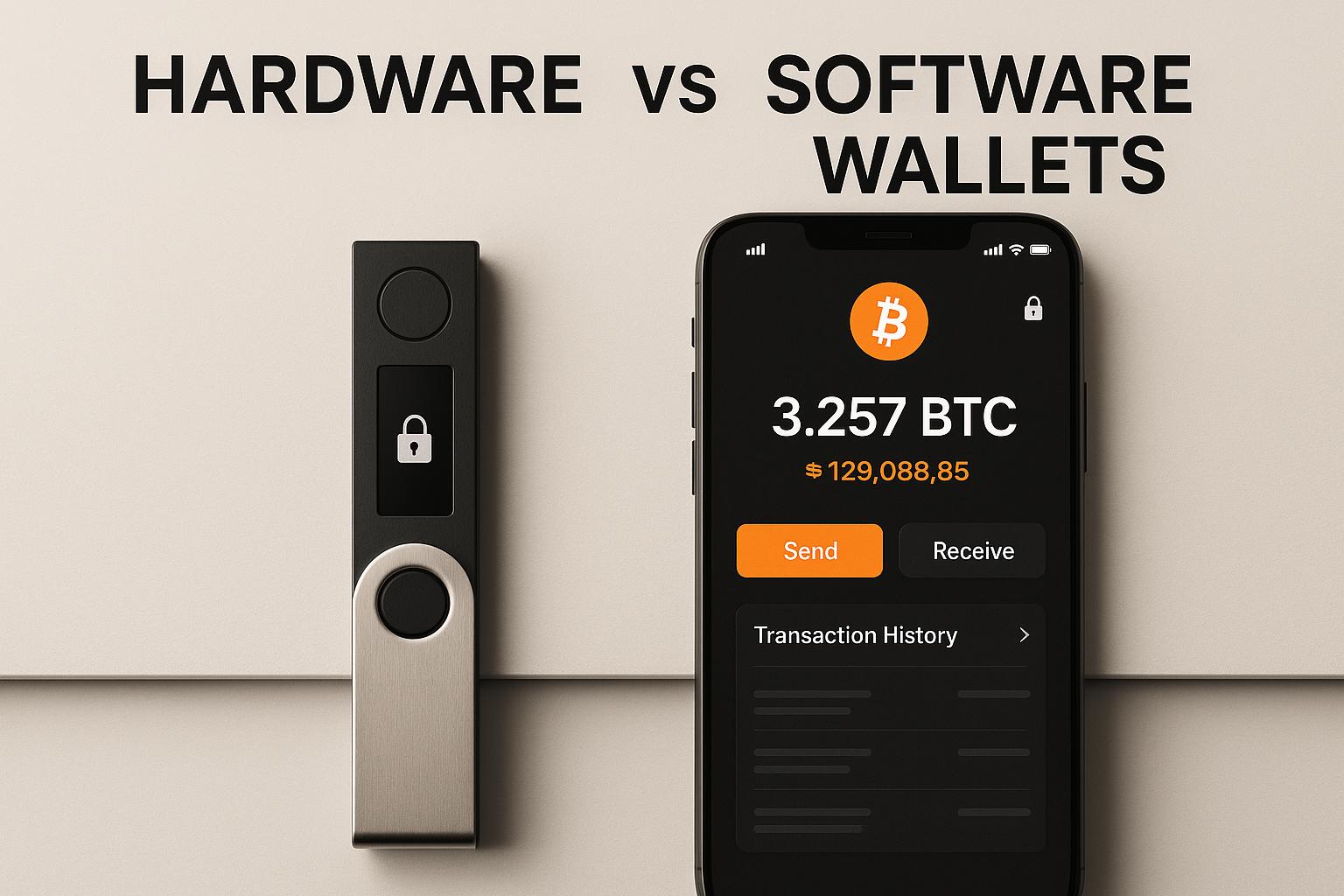
Hardware vs Software Wallets: Security Analysis
When it comes to Bitcoin, securing your private keys is non-negotiable. The type of wallet you choose – hardware or software – directly impacts the safety of your Bitcoin. Here’s a quick breakdown:
- Hardware Wallets: Physical devices that store private keys offline, protecting them from online threats like malware and phishing. They’re ideal for long-term storage and large holdings but require more effort to set up and use.
- Software Wallets: Apps for your phone, computer, or browser that store private keys online. They’re convenient for frequent transactions but are more vulnerable to hacking and malware.
Quick Comparison
| Feature | Hardware Wallets | Software Wallets |
|---|---|---|
| Security | High (offline storage) | Moderate to Low (online risk) |
| Ease of Use | Moderate (requires setup) | High (quick access) |
| Cost | $50–$200 | Free |
| Best For | Long-term storage | Frequent transactions |
Key Takeaway: Use a hardware wallet for maximum security if you’re holding Bitcoin long-term. For smaller amounts or day-to-day use, a software wallet may be more practical. Always back up your seed phrase securely, and consider your needs before choosing.
Hot vs Cold Wallets: What’s Better to Store Crypto?
Security Features and Attack Protection
The way hardware and software wallets handle security is fundamentally different, especially when it comes to defending against various types of attacks. Knowing these differences is key to choosing the wallet that aligns with your security needs.
How Hardware Wallets Minimize Security Risks
Hardware wallets are built with security at their core, starting with their offline-first design. A standout feature is the secure element chip, which generates and stores your private keys. Even if someone physically gets their hands on the device, extracting these keys is nearly impossible.
When you authorize a transaction, the hardware wallet signs it internally. This means your private keys never leave the device or get exposed to your computer or the internet. By keeping this process isolated, hardware wallets shield your Bitcoin from malware designed to swipe private keys.
Additional safeguards include PIN protection, which locks the device and can even wipe its data after too many incorrect attempts. Many models also offer passphrases, acting as an extra layer of security by letting you add a custom word to your seed phrase.
Because hardware wallets operate offline, they’re naturally immune to remote hacking, phishing attacks, and man-in-the-middle schemes. Most devices come with small screens that display transaction details, allowing you to confirm the recipient’s address and the amount before approving the transaction. This feature helps prevent address substitution attacks, where malware might alter the destination address on your computer.
Now, let’s look at the challenges software wallets face in comparison.
Software Wallet Risks and Vulnerabilities
Unlike hardware wallets, software wallets operate in an online environment, making them more susceptible to security threats. Their attack surface is significantly larger, as they share the same device used for everyday internet activities.
Malware attacks pose the greatest danger. Malware can monitor your clipboard to swap out Bitcoin addresses, take screenshots of your wallet, or even steal private keys directly from your device. Some malware is specifically designed to target Bitcoin wallets and can lurk undetected for extended periods.
Phishing scams are another major risk. Attackers often create fake websites that look identical to legitimate wallet services, tricking users into entering sensitive information like seed phrases or private keys. Since software wallets often require web interaction, the chances of falling for these scams are higher.
Operating system vulnerabilities further expose software wallets. Any weakness in your device’s OS can potentially compromise your wallet. For example, if your OS is breached, hackers could gain access to wallet files and private keys. This risk increases in cases of device theft, where saved passwords or biometric authentication might be bypassed.
Frequent software updates are also essential for addressing new vulnerabilities, but many users delay or overlook these updates, leaving their wallets open to known exploits.
Security Comparison: Hardware vs. Software Wallets
| Threat Type | Hardware Wallets | Software Wallets |
|---|---|---|
| Remote Hacking | Highly resistant due to offline storage | Vulnerable – always connected to the internet |
| Malware Attacks | Protected – private keys stay isolated | High risk – malware can access stored keys |
| Phishing | Strong protection – verify transactions on device | Moderate risk – depends on user vigilance |
| Physical Theft | Good protection – PIN and tamper-resistance | Weak protection – device access may compromise wallet |
| Social Engineering | Resistant – physical device interaction required | Vulnerable – users can be tricked into revealing keys |
| Man-in-the-Middle | Protected – transactions signed offline | Vulnerable during online interactions |
| Operating System Compromise | Immune – operates independently | High risk – inherits OS vulnerabilities |
| Supply Chain Attacks | Lower risk – limited attack surface | Higher risk – depends on multiple software components |
This breakdown highlights the stark differences in security approaches. Hardware wallets are designed to isolate private keys and prevent exposure, while software wallets face a much broader range of risks.
The gap widens when considering multi-vector attacks, where attackers combine methods like social engineering and malware. Hardware wallets disrupt this chain by keeping private keys completely offline, while software wallets remain vulnerable throughout the process.
For added protection, some advanced systems offer time-delayed transactions. This feature sets a mandatory waiting period before a transaction is broadcast, giving users time to cancel unauthorized transfers. While this can be used with both wallet types, it’s more commonly found in hardware wallet setups due to their stronger security framework.
Ultimately, the difference boils down to the trust model. With hardware wallets, you place trust in the device manufacturer and its secure chip technology, eliminating the need to trust your computer’s security. In contrast, software wallets require trust in your device, operating system, installed apps, and your own ability to avoid mistakes – making it a more complex and risk-prone setup.
User Experience and Backup Methods
When it comes to Bitcoin wallets, the choice often boils down to a trade-off: hardware wallets prioritize security, while software wallets focus on convenience. This balance directly impacts how users interact with their wallets and manage backups.
Ease of Use: Hardware vs. Software Wallets
Software wallets shine in terms of ease of use, especially for newcomers to Bitcoin. Their digital-first design means they’re quick to set up, with user-friendly interfaces that make navigating and completing transactions straightforward. Whether you’re at home, on the go, or making a quick purchase, software wallets allow access from any internet-connected device. This level of convenience is particularly attractive for frequent transactions where speed and accessibility matter more than maximum security.
On the other hand, hardware wallets come with a steeper learning curve. Setting one up involves installing companion software, connecting the physical device, and toggling between your computer screen and the wallet’s small display. Each transaction requires connecting the device, entering a PIN, verifying the details, and physically confirming the transaction. While this process may seem tedious at first, it’s a deliberate security feature, ensuring you manually verify each step.
Another key difference? Software wallets are free, while hardware wallets typically cost between $50 and $200. For those who value convenience and plan to make frequent transactions, software wallets offer a smoother experience. However, if your priority is long-term storage and top-tier security, the extra effort required by hardware wallets is well worth it.
Backup and Recovery Methods
Regardless of the wallet type, having a solid backup strategy is non-negotiable. Both hardware and software wallets rely on a 12- or 24-word seed phrase as the ultimate backup. Losing this phrase means losing access to your Bitcoin permanently. However, the way you manage backups varies depending on the wallet type.
Hardware wallets require you to safeguard both the physical device and the recovery phrase. The device itself should be stored in a secure location, such as a fireproof safe or a safety deposit box, to protect it from physical threats like fire or water damage. Importantly, your seed phrase should be stored separately from the wallet – again, in a fireproof safe or another secure location. Don’t forget to choose a strong, memorable PIN for added security.
With software wallets, there’s no physical device to worry about, but this introduces other risks. Since your recovery phrase might be stored digitally, it’s more vulnerable to malware or hacking. To mitigate this, consider using a trusted password manager to store your recovery phrase and PIN securely. Just make sure the password manager itself is well-protected. Additionally, regular backups of your wallet files – stored on separate devices or encrypted cloud storage – can safeguard against device failure.
No matter which wallet you choose, testing your recovery process is crucial. Periodically verify that you can restore your wallet using your seed phrase on a different device or with alternative wallet software. This practice ensures your backup information is accurate and functional before you face an emergency.
For U.S. users, a fireproof home safe or a safety deposit box offers reliable options for storing both hardware wallets and seed phrases securely.
sbb-itb-7e890ce
Multi-Signature Setup Compatibility
Multi-signature (or multisig) wallets add an extra layer of protection to Bitcoin storage by requiring multiple private keys to approve a transaction. The way different wallet types handle multisig setups can have a direct impact on security.
Multi-Signature Wallet Basics
Unlike traditional wallets that rely on a single private key, multisig wallets require more than one key to authorize a transaction. A common setup is 2-of-3, meaning two out of three keys must be used to approve a transaction. This approach minimizes the risk of losing access to your funds due to a single point of failure, offering a more secure way to manage Bitcoin. Let’s see how this concept plays out in hardware and software wallets.
Hardware Wallets in Multi-Signature Setups
Hardware wallets play a crucial role in multisig setups by keeping private keys offline. This offline storage ensures that even if one device is compromised, the other keys – stored separately on secure hardware – remain safe. This isolation provides a strong defense against online threats, making hardware wallets a reliable option for multisig configurations.
Multisig Comparison: Hardware vs Software Wallets
When comparing hardware and software wallets in multisig setups, the distinction becomes clear. Software wallets store keys online, which can expose them to risks like malware or hacking. On the other hand, hardware wallets keep each key offline, significantly reducing the chances of a breach. This separation makes hardware wallets a more secure choice for multisig environments, offering peace of mind for Bitcoin holders.
Security Recommendations by User Type
Now that we’ve covered the technical comparisons, let’s focus on how Bitcoin security practices can be tailored to different types of users. Your approach to securing Bitcoin should align with your usage habits and the amount of Bitcoin you hold.
Choosing Wallets Based on Your Needs
For long-term holders, hardware wallets are the gold standard for security. These devices are designed to keep your Bitcoin safe over months or years, far removed from online threats. To ensure maximum safety, always buy your hardware wallet directly from the official manufacturer or an authorized reseller – this minimizes the risk of tampering.
Frequent traders, on the other hand, face a unique challenge. While hardware wallets are highly secure, they can be cumbersome for those making regular transactions since they require physical interaction for each trade. In this case, software wallets, often referred to as "hot wallets", offer the convenience of quick access. However, it’s wise to store only a limited amount in these wallets to reduce exposure to online risks. As Guneet Kaur from Cointelegraph explains:
"If one is looking toward holding digital assets for the long term, cold wallets may suit them better. However, if they need a wallet for day trading and regular transactions, accessibility becomes important, so a hot wallet may be a better bet."
For institutional users and businesses managing corporate Bitcoin, a multi-signature setup with hardware wallets is highly recommended. This approach combines the security of offline storage with governance protocols, requiring multiple approvals for transactions. It’s an effective way to enforce accountability and protect significant holdings. These setups align with the layered security strategy discussed earlier, offering an extra shield against risks.
Best Practices for Wallet Security
Regardless of the type of wallet you choose, certain best practices are non-negotiable:
- Secure your seed phrase: Back it up in a safe, offline location. This phrase is the key to your funds, so treat it with the highest level of care.
- Use strong PINs: Ensure your wallet is protected with a robust PIN and verify all transactions directly on the device screen.
- Advanced features: Some hardware wallets, like the Trezor Model T, include advanced options like Shamir Backup for enhanced security.
For software wallet users, additional measures are crucial. Use strong passwords, enable two-factor authentication, and keep your wallet software updated. To further protect against cyberattacks, install antivirus software and use a VPN when accessing your wallet online. These steps can significantly reduce vulnerabilities.
Key Points for Secure Bitcoin Storage
Your choice between hardware and software wallets boils down to your priorities and how you use Bitcoin. Hardware wallets are ideal for long-term storage and large holdings because they keep private keys offline, making them highly resistant to online threats. Software wallets, on the other hand, prioritize convenience and accessibility, making them better suited for smaller amounts and frequent transactions but inherently more vulnerable due to their constant internet connection.
As Kaspersky highlights:
"Although a user does not need a hardware wallet to begin investing in cryptocurrency, it is highly recommended if they are trading in large amounts of coin."
Ultimately, aligning your wallet choice with your specific needs – while adhering to robust backup and security practices – is essential for protecting your Bitcoin assets effectively.
FAQs
What are the main security differences between hardware wallets and software wallets for Bitcoin storage?
Hardware wallets, commonly called cold wallets, store your private keys offline on a physical device. This offline approach offers a strong defense against online risks like hacking, phishing, and malware. Even if your computer or smartphone gets compromised, your Bitcoin stays protected.
In contrast, software wallets, or hot wallets, are connected to the internet and keep private keys on your device or browser. They’re convenient for frequent transactions but come with higher risks, such as malware attacks or phishing attempts. For long-term storage and maximum security, hardware wallets are the way to go. Meanwhile, software wallets work well for smaller amounts and everyday transactions.
How do hardware wallets offer better protection against phishing and malware compared to software wallets?
Hardware wallets offer a higher level of security against phishing and malware attacks by keeping your private keys offline. Since these keys are stored in a secure, offline environment, they remain safe even if your computer is compromised by malicious software. Another key feature of hardware wallets is their built-in screen, which displays transaction details like the recipient’s address and the amount. This allows you to double-check and confirm the information before approving a transaction, ensuring that no malware can secretly alter the details.
On the other hand, software wallets are more vulnerable because they operate on devices connected to the internet. This makes them a potential target for phishing scams or malware designed to steal private keys or manipulate users into approving fraudulent transactions. While software wallets are often more convenient for everyday use, they demand extra vigilance and strong security measures to reduce these risks.
What are the best ways to securely back up and store the seed phrase for hardware and software wallets?
To keep your seed phrase safe – whether you’re using a hardware or software wallet – there are a few essential steps you should take:
- Write it down on paper: Your seed phrase, typically 12 to 24 words, should be written on paper and stored in a secure, offline spot. A fireproof and waterproof safe is a great option. Avoid saving it digitally on devices like your computer, phone, or cloud storage to minimize hacking risks.
- Consider splitting it up: For extra protection, you can divide the phrase into parts and keep them in separate locations. This way, even if one part is compromised, the full phrase remains safe.
- Keep it private: Never share your seed phrase with anyone. Be vigilant about phishing scams – if someone gets hold of your seed phrase, they can access your funds.
By taking these precautions, you can greatly reduce the chances of losing access to your wallet or falling victim to theft.
Related Blog Posts
- Bitcoin Wallet Backup: Complete Security Checklist
- 5 Common Bitcoin Security Threats and Solutions
- Ultimate Guide to Bitcoin Transaction Security
- Never leave Bitcoin on Exchanges, Learnings from Bitcoin7.com Hack in 2011
https://app.seobotai.com/banner/banner.js?id=68f9807b9cea6427b3f56952