


Top Bitcoin Privacy Enhancements with Miniscript
Bitcoin’s public ledger makes transactions visible to everyone, raising privacy concerns for users who want to keep their financial activities private. Miniscript, a simplified programming language for Bitcoin, offers tools to improve privacy and security without requiring deep technical expertise. Here’s a quick summary of what Miniscript enables:
- Threshold Multisig: Only a subset of signers is required to approve transactions, reducing exposure and improving privacy.
- Timelocks: Transactions can be delayed until a specific time or block height, adding a buffer period for security.
- Taproot Integration: Complex spending conditions appear the same as simple transactions, hiding advanced features from observers.
BitVault, a wallet leveraging Miniscript, adds features like time-delayed transactions and a 2-of-3 multisig setup to protect users from unauthorized access or coercion. It also uses open-source code for transparency.
While Miniscript simplifies advanced Bitcoin features, it introduces some complexity. However, its structured approach makes it easier to balance privacy, security, and usability, especially for U.S. users seeking better control over their Bitcoin transactions.
Miniscript in Nunchuk Bitcoin Wallet Is A GAME CHANGER – Here’s Why
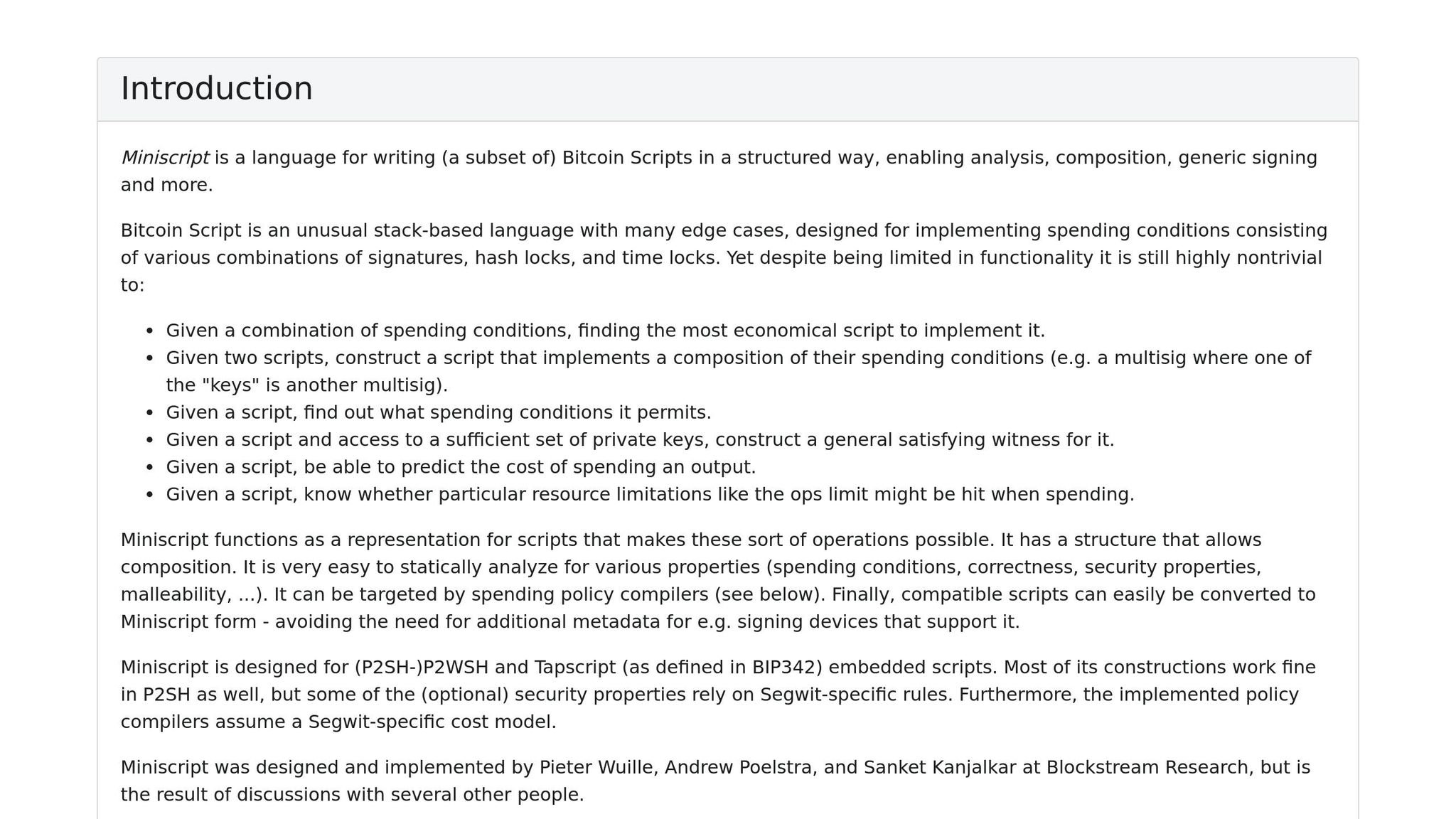
Privacy Features Enabled by Miniscript
Miniscript introduces flexible transaction rules that enhance both the privacy and security of Bitcoin transactions.
One of its standout abilities is refining multisignature (multisig) setups to better protect user privacy.
Threshold Multisig for Privacy
With Miniscript, threshold multisig becomes more efficient. This approach allows only a specific subset of signers to approve a transaction, reducing the exposure of all participants involved. This not only strengthens privacy but also improves overall security by limiting unnecessary disclosure of information.
Additionally, the integration of time-based conditions adds another layer of reliability to transaction processes.
Timelocks for Privacy and Security
Miniscript also simplifies the use of time-locked contracts. These contracts ensure that transactions can only be executed after a predetermined time or block height. This feature enhances security by providing a buffer period, allowing users to respond in case of unauthorized access attempts.
Privacy Methods: Benefits and Trade-Offs
Miniscript brings a host of privacy-enhancing techniques to Bitcoin, but with these advancements come certain trade-offs. By allowing flexible spending rules, Miniscript empowers users to fine-tune their balance between security, privacy, and ease of use.
Privacy vs. Usability and Cost
Methods like threshold multisig and time-locked contracts highlight how privacy improvements often come with added complexity. While these techniques bolster security and privacy, they may also increase implementation challenges and associated costs.
Choosing the best approach requires weighing the level of security and privacy you need against the intricacies of deploying these advanced methods. These considerations are key to how BitVault applies Miniscript, aiming to enhance privacy while managing risks effectively.
sbb-itb-7e890ce
How BitVault Uses Miniscript for Privacy
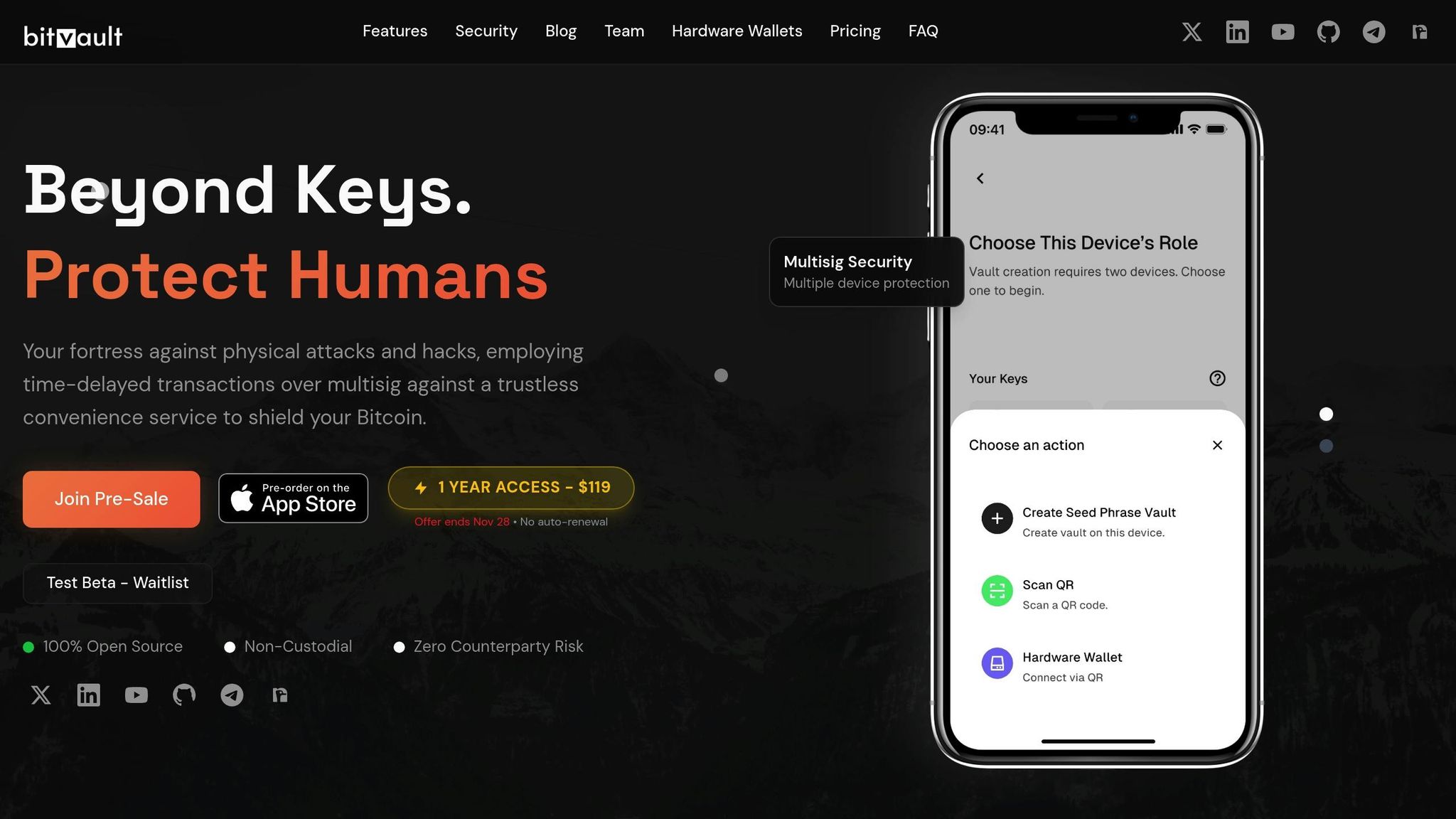
BitVault takes Bitcoin transaction security a step further by incorporating Miniscript, a tool designed to enhance both privacy and protection against digital threats. By leveraging Miniscript, BitVault introduces unique measures to safeguard users’ assets.
Time-Delayed Transactions and Alerts
One standout feature BitVault offers is time-delayed transactions. With Miniscript, a mandatory waiting period – ranging from a few hours to several days – is applied before a transaction is broadcast. During this delay, users receive secure notifications on a trusted device, giving them the opportunity to cancel any unauthorized transactions.
This feature acts as a buffer against coercion or duress. If a transaction is initiated under pressure, the delay allows users to review and cancel it once they regain control of the situation. It also serves as a final checkpoint, letting users double-check transaction details before any funds are moved. These safeguards work hand-in-hand with BitVault’s other multisig protections to create a robust security system.
Multisig Setup for Privacy and Risk Management
BitVault integrates threshold multisig setups through Miniscript, often using a 2-of-3 configuration. This approach requires multiple signatures to authorize a transaction, significantly reducing the risks associated with stolen keys or digital hacks. By spreading control across multiple keys, BitVault adds an extra layer of resilience to transactions.
Open-Source Code and Public Trust
To ensure transparency, BitVault uses an open-source implementation of Miniscript. This code is subject to public audits, allowing the community to verify its security and privacy features. This openness fosters trust and confidence in BitVault’s commitment to protecting user privacy.
Conclusion: Better Bitcoin Privacy with Miniscript
Miniscript simplifies the creation of complex Bitcoin scripts, bringing advanced privacy tools like threshold multisig, timelocks, and Taproot integration within reach for everyday Bitcoin users in the U.S. By offering a standardized approach, it enables users to implement these features without diving into the technical weeds.
When paired with Taproot, Miniscript ensures that even intricate spending conditions look no different from straightforward single-signature transactions. This makes it nearly impossible for outside observers to distinguish whether a wallet is using advanced features like multisig or timelocks unless those specific spending paths are actually triggered. In essence, it effectively conceals on-chain activity patterns.
Beyond privacy, Miniscript introduces robust security measures like hierarchical key structures and time-delayed spending policies. These features significantly reduce risks – no single compromised key can jeopardize funds, and the standardized nature of Miniscript makes it easier to audit scripts, minimizing errors that could lead to vulnerabilities[2].
BitVault provides a clear example of these benefits in action. Its 2-of-3 multisig setup, combined with time-delayed recovery options, offers a layered security model while maintaining transparency. This approach aligns perfectly with the needs of privacy-conscious Bitcoin holders who want to retain full control over their assets.
While Miniscript does add some complexity, its standardization and integration with Taproot strike a balance between privacy, usability, and cost-efficiency[2].
For U.S. Bitcoin users who value privacy and security, opting for wallets that support Miniscript and Taproot is a smart move. This technology elevates Bitcoin from a basic payment system to a programmable, privacy-focused store of value – tailored to meet individual security preferences while preserving the transparency and auditability that underpin Bitcoin’s reliability.
FAQs
How does Miniscript enhance Bitcoin transaction privacy?
Miniscript improves privacy for Bitcoin transactions by letting users design more intricate and flexible spending conditions without exposing unnecessary details on the blockchain. It organizes these conditions in a modular way, helping users conceal sensitive information like multisignature setups or time-based restrictions.
This layer of privacy reduces risks tied to surveillance, targeted attacks, and exposing personal financial strategies. With Miniscript, Bitcoin transactions stay secure, efficient, and better protected from prying eyes.
What challenges or trade-offs should I consider when using Miniscript to enhance Bitcoin privacy?
Using Miniscript to enhance Bitcoin privacy comes with its own set of challenges and compromises. While it opens the door to more flexible and transparent scripting, it can also feel overwhelming for users who aren’t familiar with Bitcoin’s scripting language. This might mean investing time to learn or depending on tools designed to make Miniscript easier to use.
There’s also the matter of cost. Privacy-focused setups that leverage Miniscript can result in slightly higher transaction fees because of the extra data included in the script. On top of that, advanced privacy features often demand meticulous key management – especially in multi-signature setups – to maintain security without making things overly complicated.
Even with these hurdles, Miniscript stands out as a powerful option for those prioritizing privacy and security. It’s a valuable resource for safeguarding Bitcoin in a wide range of situations.
How does BitVault use Miniscript to enhance Bitcoin transaction security and protect users from threats?
BitVault uses Miniscript to strengthen Bitcoin transaction security by introducing more adaptable and secure multisignature setups. With Miniscript, users can create custom spending rules, ensuring that transactions only go through when specific conditions are met. This approach adds a crucial layer of protection against risks like unauthorized access or potential coercion.
The integration of Miniscript brings advanced features like time-locked transactions, multisig policies, and secret notifications into the mix. Together, these tools enhance privacy and provide robust defenses, keeping user funds secure even in challenging or high-stakes situations.
Related Blog Posts
- Ultimate Guide to Bitcoin Transaction Security
- Miniscript Policies for Multisig Nodes
- Mitigating Time-Delay Risks with Multisig Wallets
- Lightning Network Security: Time-Locked Contracts Explained
https://app.seobotai.com/banner/banner.js?id=69154b9d60ed14ccdc6b83e2